
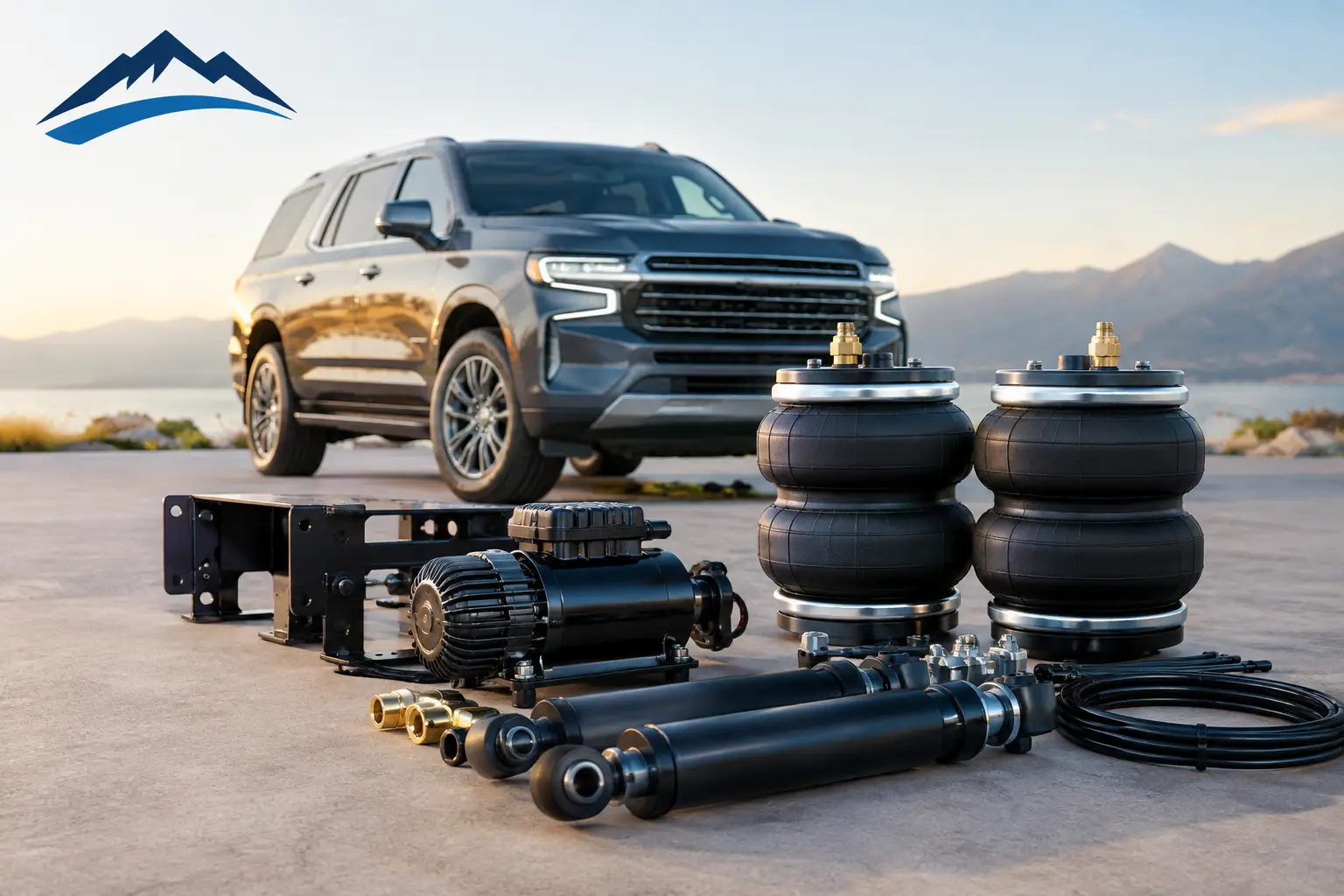
A universal suspension setup can get a vehicle in the air. Vehicle specific air suspension kits are built to make the whole system work like it belongs there. That difference shows up in the brackets, air spring dimensions, line routing, suspension geometry, wheel clearance, and the way the vehicle drives once the build is finished.
For a stance-focused sedan, a lifted truck, or a show-ready SUV, air ride is not just about dropping the vehicle at a meet. It is about controlling ride height on demand without treating fitment as an afterthought. The right kit gives a build the range to park low, clear obstacles, load passengers, and dial in the visual impact that fixed suspension cannot match.
Why Vehicle Specific Air Suspension Kits Matter
Air suspension starts with a simple goal: use air pressure to adjust ride height. The real work is in applying that concept to a particular chassis. Every platform has its own mounting points, factory suspension design, available travel, axle layout, weight distribution, and clearance limits. A system intended for your exact vehicle accounts for those realities from the start.
A vehicle-specific kit typically replaces or works with the factory spring and shock arrangement using application-matched air struts, air springs, brackets, and hardware. Instead of adapting a generic bag to fit wherever space is available, the components are selected around the vehicle's suspension architecture. That can mean an air strut built for a MacPherson front end, a rear bag and bracket setup designed around a truck axle, or application-specific mounts that preserve proper placement through the suspension's travel.
The result is cleaner installation and more predictable operation. It also helps protect the details enthusiasts care about: tire-to-fender clearance, axle movement, shock travel, brake line routing, and the ability to run the wheel and tire package the build demands.
Fitment is especially critical when a vehicle is running aggressive forged wheels. Wheel width, offset, tire profile, fender treatment, and desired parked height all affect suspension decisions. Air ride gives the driver adjustment, but adjustment does not erase bad measurements. A properly planned setup lets the wheels sit with intention at aired-out height while maintaining usable clearance at driving height.
What a Complete Kit Should Address
The air springs or air struts get the attention, but they are one part of the system. A finished air-ride build needs a way to create, store, move, and manage compressed air. It also needs components sized for how the vehicle will be used.
At the suspension level, the kit must deliver the appropriate load capacity and travel for the platform. A heavy SUV or truck has different demands than a lightweight coupe. Spring rate, bag style, damper valving, and mount design all shape how controlled the vehicle feels at ride height. Going lower is the visual objective for many builds, but drivability remains the standard that separates a finished setup from a compromise.
The management side includes the compressor or compressors, air tank, valves or valve manifold, air lines, fittings, wiring, controller, and height sensors when the system uses height-based management. Pressure-based systems adjust according to the pressure sent to each corner. Height-based systems use sensors to target a repeatable ride height, even when passenger load or cargo weight changes. Neither is automatically right for every owner. Pressure control can suit a straightforward setup, while height-based management is often the better call for drivers who want consistent presets and more exact control.
Tank and compressor selection also depends on expectations. A larger tank can provide more reserve air for adjustments, while dual compressors can speed recovery and support frequent use. That does not mean every build needs the biggest available setup. More hardware takes more space, adds cost, and requires thoughtful mounting. For many vehicles, the strongest system is the one that matches the owner's driving habits rather than chasing a parts list built for a different platform.
Built for Your Vehicle, Not a Generic Parts Shelf
The appeal of application-specific air ride is not limited to installation convenience. It is about retaining confidence when the vehicle is in motion. Factory suspension was engineered around a particular chassis. An air suspension conversion changes part of that equation, so the components must work together through compression, rebound, steering input, and load changes.
A properly matched front air strut needs room to operate without contacting the wheel, tire, chassis, or surrounding components. In the rear, bag location matters just as much. Incorrect placement can create binding, limit travel, or put unnecessary stress on the bag and mounts. On trucks, axle travel and driveshaft angles deserve close attention. On lowered cars, inner wheel clearance, fender clearance, and alignment range can become the deciding factors.
This is why vehicle-specific hardware matters. It replaces guesswork with parts designed around known mounting locations and suspension motion. It does not eliminate the need for professional installation or alignment, especially on an aggressively fitted build. It gives the installer a stronger foundation and gives the owner a more dependable result.
For custom builds, the best time to plan air ride is before final wheel specs are locked in. A deep-lip forged wheel, a wide tire, and a low parked height can all work together, but only when the build is measured as a complete package. Decide how low the vehicle needs to sit aired out, where it needs to drive safely, and how much suspension travel is required in between. That process is more valuable than simply asking how low a kit can go.
Ride Quality Is a Setup Decision
Air suspension has a reputation for flexibility because it can change height, but quality comes down to more than a controller and a compressor. Damping, alignment, tire selection, bushing condition, and air pressure all influence how the vehicle behaves on the road.
At the correct driving height, a well-matched setup can provide a composed, controlled ride. But air ride is not a free pass around suspension fundamentals. Running too low while driving reduces available travel. Excessively stiff damping, poor alignment, or an overextended tire and wheel fitment can make any suspension feel harsh or unstable. The best builds use a sensible driving preset and reserve the lowest setting for parked presentation.
That distinction matters for vehicles that see real road miles. A daily-driven luxury sedan may prioritize consistent ride-height presets and cabin-friendly compressor placement. A truck may need enough lift range to handle uneven access roads, towing considerations, or changing cargo loads. A weekend show car may put more emphasis on maximum drop and a polished trunk display. The system should follow the mission of the vehicle.
Installation Details That Protect the Build
Air ride rewards clean workmanship. Air lines should be routed away from exhaust heat, moving suspension parts, sharp edges, and abrasion points. Wiring needs proper protection, secure connections, and correctly sized fusing. Compressors and tanks need firm mounts, while drain access should be considered from day one because moisture management is part of long-term system care.
A quality installation also leaves room to service the vehicle. Hiding every component may look impressive, but a tank, compressor, manifold, or fuse that cannot be inspected easily can turn simple maintenance into a major job. Show-quality presentation and serviceability should work together.
Once installed, the vehicle should be aligned at its intended driving height. That is the height where it will spend most of its time on the road, not necessarily its highest or lowest position. After initial use, recheck fittings, mounting hardware, line routing, and tire clearance at full steering lock and throughout suspension travel. Small details caught early protect wheels, tires, and suspension components later.
Choosing the Right Direction for Your Build
Vehicle specific air suspension kits make the most sense for owners who want control without abandoning a tailored fitment strategy. They are a premium upgrade because the system extends beyond the visible drop. You are investing in application-matched suspension components, management hardware, installation planning, and the ability to shape the vehicle's stance around the moment.
At Maddox Motorworks, the strongest air-ride builds are planned alongside the wheel and tire package, not added after everything else is already decided. Ryder Air systems are built for enthusiasts who want their suspension to support the full visual direction of the vehicle.
Start with the platform, the intended wheel fitment, and the way the vehicle will actually be driven. When those three decisions are clear, air suspension becomes more than a dramatic parked stance. It becomes the control system that lets your vehicle look exactly how you built it to look.