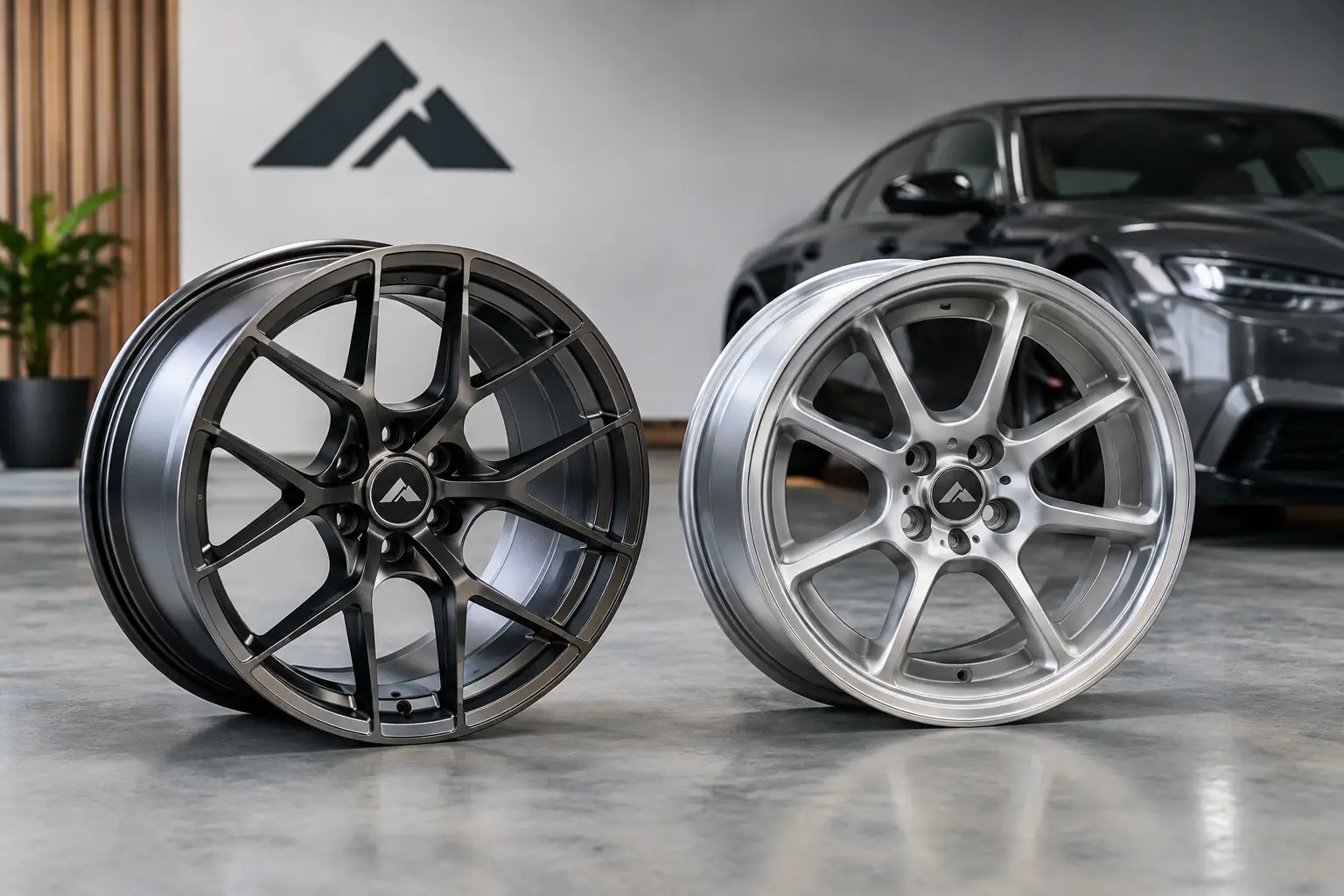
A wheel can change the entire presence of a vehicle before the engine ever turns over. But the decision behind the look matters just as much as the finish, lip, or spoke design. In the forged vs cast wheels conversation, the real difference comes down to how the wheel is made, how it handles load, and how precisely it can be built around your vehicle.
Cast wheels have their place. They make sense for many daily drivers, budget-focused projects, and owners who want an aftermarket look without stepping into a custom wheel investment. Forged wheels are built for a different standard: lighter material usage, higher strength potential, and the custom fitment control that defines a serious street, show, or performance build.
Forged vs Cast Wheels: The Manufacturing Difference
A cast wheel begins as molten aluminum poured into a mold. Once the metal cools and solidifies, the wheel is machined, finished, and prepared for use. It is an efficient manufacturing process that allows wheel companies to produce large quantities of designs at a lower cost.
That efficiency is why cast wheels are widely available in common diameters, bolt patterns, offsets, and finishes. For a stock-height daily driver running a straightforward fitment, that availability can be a real advantage. You can often find a ready-to-ship option without waiting for a wheel to be produced specifically for your vehicle.
A forged wheel starts as a solid billet of aluminum, typically high-grade 6061-T6 material. Extreme pressure is used to compress and shape the material before it is CNC machined into the final design. The forging process aligns and densifies the aluminum grain structure, creating a wheel blank with exceptional strength characteristics.
This is not just a different way to make the same wheel. It changes how much material is needed to achieve the intended load rating and design. A forged wheel can be engineered with material placed where it is needed and removed where it is not. That gives builders more freedom to pursue aggressive styling, deeper concavity, and vehicle-specific fitment without treating the wheel as a generic part.
Weight Matters More Than the Spec Sheet
Wheel weight affects more than the number printed on a product page. Wheels, tires, brake rotors, and other moving suspension components are unsprung mass. Reducing that mass can help the suspension react more effectively to changes in the road surface.
A lighter wheel can also reduce rotational mass. The result may be sharper acceleration response, more controlled braking feel, and a more direct steering character. The difference will not transform every vehicle into a track car, but it is meaningful on performance cars, heavy luxury sedans, trucks with larger wheel packages, and builds where suspension response is part of the goal.
Forged wheels are often lighter than comparable cast wheels because their material strength allows a wheel designer to avoid unnecessary bulk. That does not mean every forged wheel is automatically lighter than every cast wheel. Diameter, width, lip configuration, spoke design, load requirement, and finish all affect final weight.
A 24-inch forged wheel built for a full-size SUV still has to support a full-size SUV. A forged wheel does not ignore physics. What it gives the builder is a better balance of strength, weight, and design freedom for the application.
Strength, Durability, and Real-World Roads
Strength is usually the main reason enthusiasts move toward forged wheels. The forged aluminum structure is highly resistant to stress, making it well suited to high-performance driving, heavier vehicles, low-profile tire setups, and demanding custom fitments.
That matters when a build runs wide tires, a staggered setup, a larger brake package, or air-ride suspension. These combinations can create more specific demands than a stock wheel and tire package. The wheel needs to clear the brakes, sit correctly in the fender, handle the vehicle load, and look right at ride height and aired out.
Cast wheels can be durable, especially when sourced from a reputable manufacturer and matched correctly to the vehicle. They are not automatically weak or unsafe. The trade-off is that cast construction generally needs more material to reach the necessary strength, and it offers less flexibility when pushing wheel dimensions or chasing a highly tailored design.
Road conditions deserve an honest mention. A forged wheel can be extremely strong, but no wheel is invincible against a severe pothole strike or curb impact. Tire sidewall, air pressure, vehicle weight, wheel diameter, and driving habits all matter. A premium wheel package should be selected for how the vehicle is actually driven, not only for the photo taken at full drop.
Custom Fitment Is Where Forged Wheels Pull Away
Off-the-shelf cast wheels are usually produced around broad fitment ranges. That means the same wheel may be marketed for multiple vehicles with similar bolt patterns. The fit can work, but it may rely on compromise: a conservative offset, spacers, limited brake clearance, or a design that does not sit exactly where you want it in the fender.
Forged wheels are commonly built to order. Diameter, width, offset, bolt pattern, center bore, finish, spoke profile, and hardware can be selected around the actual vehicle. This is the difference between making a wheel fit and building a wheel for your vehicle.
For a flush street setup, a tucked air-ride build, or a wide-body project, those details are not cosmetic afterthoughts. A few millimeters can determine whether a wheel clears a caliper, contacts a fender liner, or sits with the stance the build deserves.
Brake clearance is especially critical. Big brake kits and factory performance brakes can require a specific spoke profile and barrel shape. Buying a universal wheel based only on diameter and bolt pattern is how builders end up with expensive parts that do not clear. A custom forged setup allows the wheel architecture to be considered before production begins.
Maddox Motorworks approaches forged wheel fitment as part of the full build, whether the goal is a clean luxury sedan, a performance coupe, a lifted truck, or an air-ride SUV sitting exactly where it should.
Price: The Trade-Off That Cannot Be Ignored
Cast wheels cost less because the production process is faster and built for volume. For many owners, that is the deciding factor. If the goal is a visual upgrade on a daily driver with stock suspension and standard tire sizes, a quality cast wheel may deliver the look you want without requiring a custom budget.
Forged wheels cost more because the material, machining time, engineering, and made-to-order process cost more. The price reflects a wheel that is not pulled from a shelf in a one-size-fits-most specification. It is a component built around the vehicle, the desired stance, and the intended use.
The value question depends on the build. A forged wheel package makes more sense when fitment is non-negotiable, when wheel weight and strength matter, or when the vehicle itself is a long-term investment. It also makes sense for owners who are done buying the same wheels seen on every other car at the meet.
Do not compare forged and cast wheels only by purchase price. Consider tire replacement, brake clearance, suspension plans, future modifications, and whether the wheel choice will still fit the build after its next phase. The cheapest option can become the expensive option if it has to be replaced when the stance, brakes, or bodywork changes.
Which Wheel Is Right for Your Vehicle?
Choose a quality cast wheel when the build calls for a dependable aftermarket upgrade, common sizing, and controlled cost. It is a practical route for many daily-driven cars and trucks, particularly when exact fitment and maximum performance gains are not the priority.
Choose forged when the wheel is a defining piece of the build. It is the stronger choice for custom offsets, aggressive widths, deep concavity, performance-focused weight reduction, demanding brake clearance, and vehicles built around air suspension or show-level stance.
The right question is not whether forged wheels are better in every situation. They are not necessary for every vehicle. The right question is whether your build needs the precision, strength potential, and individual fitment that forging makes possible.
Before selecting a design, get clear on wheel diameter, tire size, suspension height, brake setup, driving conditions, and the look you want at every ride height. A wheel should not merely fill the wheel well. It should complete the vehicle you are building.