
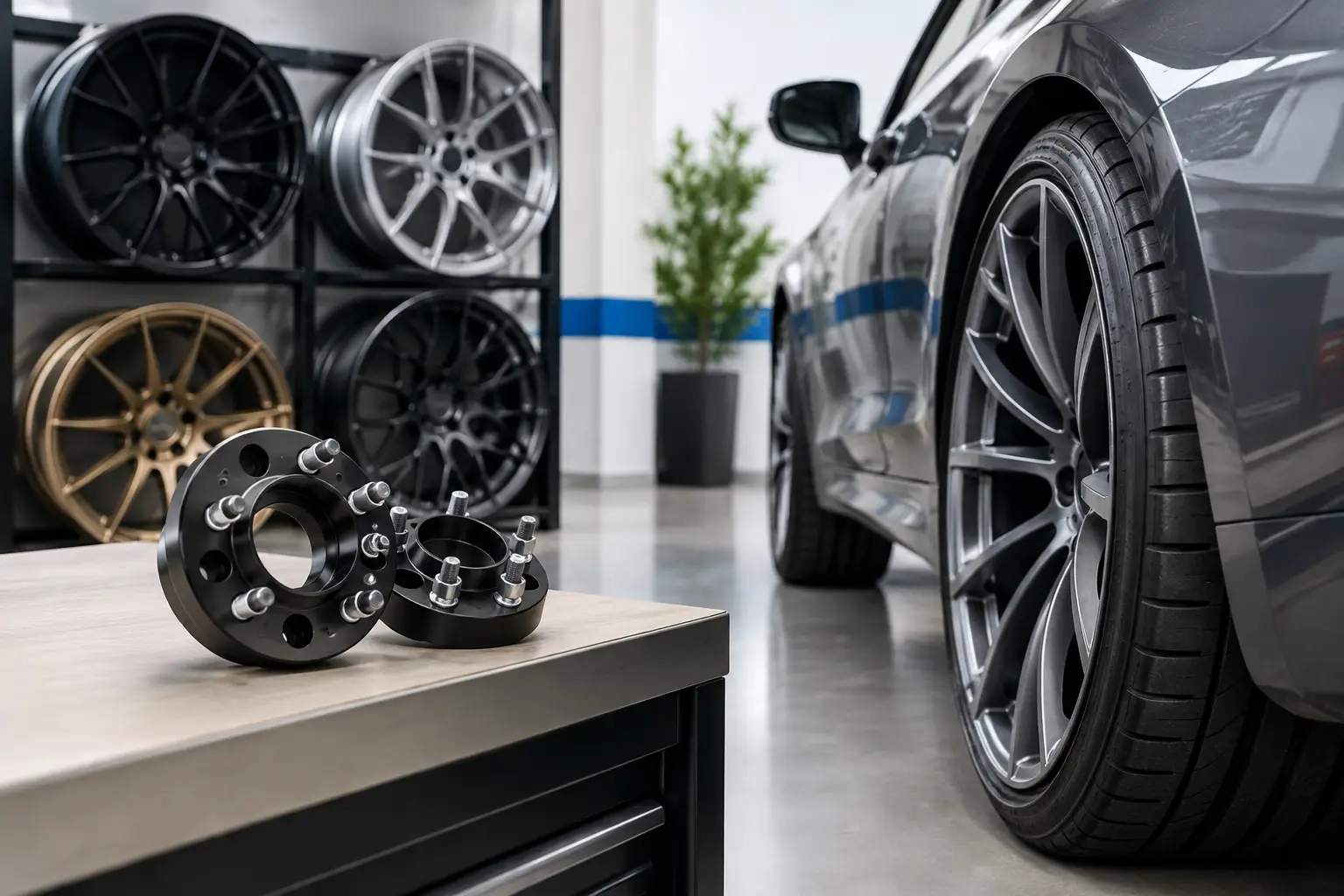
A wheel can have the right diameter, finish, and spoke design, then still look wrong because the offset misses the vehicle. This custom wheel offset guide cuts through the guesswork: offset determines where the wheel sits in the fender, how it clears the suspension and brakes, and whether your build looks purpose-built or simply bolted on.
For a custom forged wheel build, offset is not a catalog number to copy from another car. It is a fitment decision made around your exact vehicle, wheel width, tire size, brake package, suspension height, and intended stance.
What Wheel Offset Actually Controls
Wheel offset is the distance between the wheel's centerline and its mounting surface. It is measured in millimeters. A positive offset means the mounting surface sits toward the outside face of the wheel. A lower or negative offset moves the wheel outward toward the fender.
That simple measurement has a major visual and mechanical effect. Increase positive offset and the wheel moves inboard, closer to the strut, control arm, and inner liner. Reduce offset and the wheel moves outward, closer to the fender lip and bumper cover.
Offset is often confused with backspacing, but they are not the same thing. Backspacing measures from the wheel's mounting face to its inner barrel edge, usually in inches. Offset references the centerline. Both matter, especially on wide custom wheels, but offset is the specification most builders use to communicate how a wheel will sit on the vehicle.
A wheel's width changes the equation. Moving from an 8.5-inch wheel to a 10-inch wheel adds material to both sides of the centerline unless the offset changes. That is why a 20x10 wheel at the same offset as a 20x8.5 may rub the suspension on the inside, poke past the fender on the outside, or do both.
Positive, Zero, and Negative Offset
Most late-model performance cars, luxury sedans, and many SUVs use positive-offset wheels. The hub mounting surface is positioned outward from the centerline, which keeps the wheel package appropriately tucked relative to modern suspension geometry.
Zero offset places the mounting pad at the wheel centerline. It is common in certain older platforms and purpose-built applications, but it is not automatically a better choice for a flush fitment.
Negative offset pushes the wheel face and outer lip farther out. This can create the deep-lip, wide-track look many truck and off-road builds chase. On the wrong vehicle, however, aggressive negative offset creates excessive poke, fender contact, steering issues, and unnecessary stress on components.
The target is not the lowest offset possible. The target is the offset that places your chosen wheel and tire package exactly where it belongs.
Start With the Vehicle, Not the Wheel Design
A strong build starts with accurate vehicle information. Year, make, model, trim, drivetrain, factory wheel size, and brake package all matter. So do aftermarket brake kits, coilovers, air-ride suspension, widebody panels, and prior modifications that may change available clearance.
A factory wheel specification provides a baseline, not a final answer. From there, the fitment plan accounts for the new wheel width and tire section width. Tires vary between brands even when their labeled size matches. A 285 from one manufacturer can sit noticeably wider than a 285 from another, which changes the clearance at the fender and suspension.
Before ordering, confirm these measurements and details:
- Current wheel width, diameter, offset, and tire size
- Desired wheel width and tire size
- Distance to the strut, upper control arm, brakes, and inner liner
- Available room at the fender through steering and suspension travel
- Suspension type, ride height, alignment settings, and any body modifications
That information gives a custom wheel builder something real to engineer around. It also prevents the expensive mistake of choosing a wheel only because another build looked good in a photo.
Offset, Brake Clearance, and Wheel Profile
Offset does not work alone. Wheel face profile and barrel design are equally critical when a vehicle has large factory brakes or an aftermarket big-brake kit.
Two wheels can share the same diameter, width, and offset while offering very different caliper clearance. One may clear because its spokes curve outward and its inner barrel has the right shape. The other may contact the caliper despite matching the same basic specifications.
This is one reason forged wheels are built around more than appearance. A properly engineered forged wheel can pair the right offset with a profile designed for the brake package on your vehicle. Spacers may solve a small clearance issue in limited cases, but they are not a substitute for ordering the right wheel specification. Adding a spacer lowers effective offset and pushes the entire wheel outward, which can create new fender or tire-clearance problems.
If brake clearance is tight, provide the brake model and, when available, a brake template. That allows the wheel configuration to be checked before production instead of discovered during installation.
Fitment Changes When You Lower the Vehicle
Lowering changes more than the gap between the tire and fender. It changes the path the wheel and tire take through suspension travel. A setup that clears at stock height may rub at full compression once the vehicle is lowered.
Air-ride suspension makes this even more relevant. At ride height, a wheel may sit clean and nearly flush. At full drop, the tire can move into the fender, liner, bumper tab, or pinch weld depending on the platform's suspension geometry. Camber gain, steering angle, and tire shoulder design all become part of the conversation.
For an air-ride build, specify the ride height you plan to drive at and the height you expect to park at. A wheel package should be engineered to drive safely at ride height, not only to look dramatic when aired out for photos. Aggressive show fitment can be done, but it comes with trade-offs: reduced steering range, more careful alignment, narrowed tire choices, fender work, and less room for suspension movement.
Flush Fitment Versus Aggressive Fitment
Flush fitment means the outside tire sidewall or wheel face sits close to the fender line without extending beyond it. It is clean, controlled, and works well for performance builds, luxury sedans, and daily-driven SUVs.
Aggressive fitment pushes closer to the limits. It may use wider wheels, lower offsets, stretched or narrow-section tires, added camber, and modified fenders. The result can be striking, but the margin for error becomes smaller with every change.
Neither approach is universally better. A street-driven performance car needs predictable steering, tire life, and clearance at speed. A show-focused build may prioritize lip depth, face concavity, and a slammed parked stance. The right custom wheel offset follows the purpose of the build.
Do Not Ignore Scrub Radius and Driving Feel
Moving the wheel outward changes more than the view from the curb. It can alter scrub radius, which affects steering feel and the forces transmitted through the steering system. Large changes from factory geometry may increase steering effort, amplify kickback over rough pavement, and place added load on wheel bearings and suspension components.
That does not mean every custom wheel must match factory offset exactly. It means offset changes should be intentional. A moderate change paired with the correct width, tire, and alignment can deliver a stronger stance while keeping the vehicle composed. An extreme change made only to chase poke can compromise the way it drives.
Trucks and SUVs deserve the same discipline. Lift height, turning radius, mud-flap clearance, tire diameter, and suspension travel all influence the offset range that works. A wide wheel-and-tire package that clears while parked can still contact the liner or bumper at full lock on the road.
A Built-to-Order Offset Is Worth the Planning
Custom wheels are not a universal accessory. The wheel must clear your brakes, work with your suspension, support the tire you want, and deliver the stance you had in mind. That is why a built-to-order approach matters.
At Maddox Motorworks, the goal is not to force your vehicle into a generic wheel spec. It is to build forged wheels around the vehicle and the vision, whether that means a clean street fitment, a deep-lip truck setup, or an air-ride stance with the right driving clearance.
Bring accurate specs, be honest about how the vehicle will be used, and decide where you are willing to accept trade-offs. The best offset is the one that makes your build look finished while letting you enjoy every mile behind the wheel.