
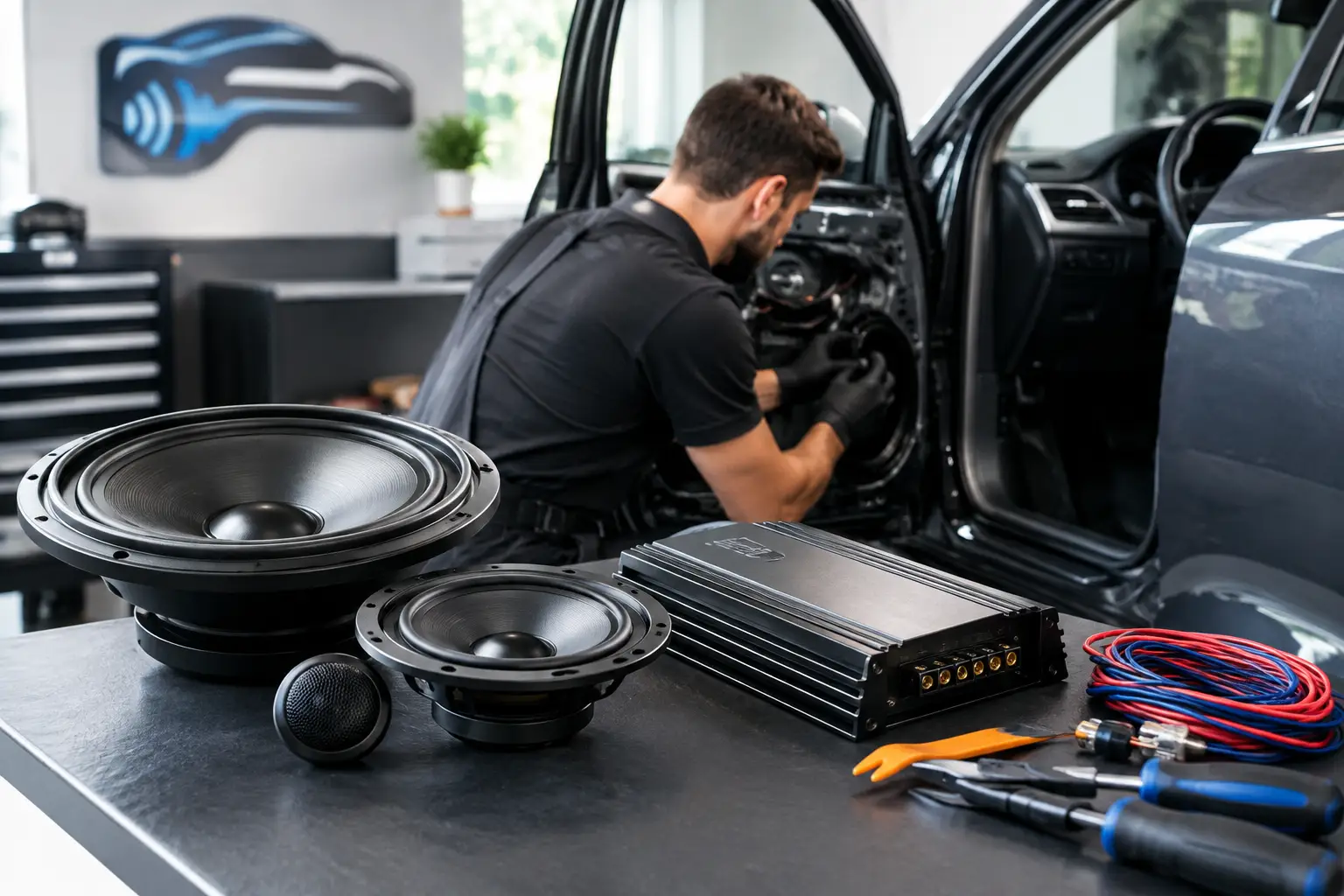
A stronger sound system starts long before the first panel comes off. Car audio system installation cost is not one flat number because every vehicle, component package, and performance target asks for a different level of work. A basic speaker replacement may be a short shop visit. A full build with subwoofers, amplifiers, custom enclosures, sound treatment, and calibrated tuning is a different class of project entirely.
For enthusiasts building a vehicle that looks as serious as it sounds, the right question is not simply, "What does installation cost?" It is, "What does it take to build the system correctly for my vehicle?"
What Car Audio System Installation Cost Typically Includes
Professional installation is the labor and supporting materials required to make every component perform safely, cleanly, and reliably. That includes mounting equipment, running protected wiring, integrating with the factory system, setting amplifier gains, and verifying that the finished system does not introduce rattles, electrical issues, or unwanted noise.
For a straightforward aftermarket head unit, speaker pair, or powered subwoofer, labor can commonly start in the $150 to $500 range. Add a multi-channel amplifier, separate subwoofer amplifier, full wiring kit, and factory-radio integration, and installation often moves into the $600 to $1,500 range.
A premium system with multiple amplifiers, custom-fit subwoofer enclosures, DSP tuning, acoustic treatment, upgraded charging components, and fabrication can run from $2,000 to $8,000 or more in installation and build labor alone. At that level, the system is no longer an accessory upgrade. It is a vehicle-specific audio build designed around output, sound quality, fitment, and presentation.
Those figures do not include the equipment itself. Premium speakers, subwoofers, amplifiers, digital signal processors, wiring, and electrical upgrades can equal or exceed labor costs depending on the build.
The Four Factors That Drive the Price
The cost of a car audio install changes quickly when the work moves beyond bolt-in components. Four factors have the biggest impact:
- System complexity: A compact powered subwoofer is far simpler than a system with front components, rear fill, multiple amplifiers, dual subwoofers, and a DSP.
- Vehicle integration: Late-model luxury vehicles, trucks with factory premium audio, and vehicles with active noise cancellation often require more integration work than older platforms.
- Fabrication level: A prefabricated enclosure keeps labor down. A custom trunk build, under-seat enclosure, amp rack, beauty panels, and color-matched trim require skilled fabrication time.
- Electrical demand: Higher-power systems may need upgraded power and ground wiring, a high-output alternator, an auxiliary battery, or voltage management to stay reliable.
The vehicle matters as much as the equipment. A system that fits cleanly in a full-size SUV may need a completely different enclosure strategy in a coupe, sports sedan, or lifted truck. Factory trim design, battery location, cargo space, seat clearance, and OEM electronics all shape the final quote.
Basic Installs vs. Custom Audio Builds
A basic install is built around function. The goal may be clearer sound from new door speakers, added bass from a compact subwoofer, or more control from an aftermarket radio. It is a smart route for drivers who want a noticeable upgrade without redesigning the vehicle's interior or electrical system.
A custom build is built around a target. That target may be deep low-end output, competition-level SPL, high-resolution sound quality, a fully hidden installation, or a show-ready trunk presentation. The difference is planning. Every component has a position, every wire has a protected route, and the enclosure is designed for the available space and the selected subwoofers.
This is where cheap installation can become expensive later. A rushed amp install might play music on day one, but poor grounding, undersized power wire, loose mounting, and no tuning can lead to voltage drop, distortion, panel noise, damaged equipment, or a system that never reaches its potential.
Why Custom Fabrication Raises the Budget
Custom fabrication is one of the clearest dividing lines in car audio system installation cost. It is also where a serious build gains its visual identity.
A custom enclosure can be made to fit a truck behind the rear seat, preserve usable cargo space in an SUV, or turn a sedan trunk into a finished display. An amplifier rack can be flush-mounted, ventilated, and trimmed to match the vehicle. Acrylic windows, LED lighting, embossed panels, and painted accents add impact, but each detail adds design and labor hours.
Fabrication is not mandatory for great sound. A well-selected off-the-shelf enclosure can deliver excellent results when space and budget matter. But a universal box is rarely the cleanest fit, the strongest visual choice, or the most efficient use of the vehicle. A built-to-order enclosure gives the system a home designed for that exact vehicle.
Factory Integration Is Not a Shortcut Job
Many modern vehicles are built around factory infotainment screens, cameras, steering-wheel controls, warning chimes, and integrated climate functions. Replacing the factory radio is not always practical or desirable. That does not mean the audio system cannot be upgraded.
A professional installation can retain the factory interface while adding amplifiers, upgraded speakers, subwoofers, and signal processing. The labor comes from obtaining a clean audio signal, maintaining factory features, managing turn-on behavior, and tuning the new equipment around the vehicle's existing acoustics.
Vehicles with factory amplified systems may require load modules, integration interfaces, or bypass strategies. Premium OEM systems can also include unusual speaker impedances and signal processing that must be accounted for before aftermarket equipment is selected. This is why a vehicle-specific quote is more valuable than a generic online labor estimate.
Do Not Overlook Tuning and Sound Treatment
A system's output number does not tell the whole story. Speaker placement, cabin reflections, enclosure design, crossover settings, time alignment, and amplifier gain structure determine whether the system sounds controlled or chaotic.
DSP tuning adds cost, but it gives the installer precise control over how each speaker works in the cabin. It can improve vocal placement, reduce harshness, blend subwoofers with front speakers, and make a high-end component set sound like it belongs in the vehicle instead of simply being installed in it.
Sound treatment is another budget decision that pays off in the right build. Treating doors, trunk panels, and selected cabin areas can reduce vibration and road noise while helping midbass perform with more authority. It is not necessary for every entry-level system, but it is a smart move when premium speakers and amplifiers are already on the table.
How to Set a Realistic Budget
Start with the outcome, not a random equipment list. Decide whether the priority is louder bass, cleaner daily listening, show-quality presentation, or a balanced system that does all three. Then set aside part of the budget for wiring, integration, installation, and tuning instead of spending everything on visible components.
As a general approach, a $1,000 equipment budget is best suited to focused upgrades rather than a fully custom system. A $3,000 to $6,000 total budget can support a stronger multi-component setup when parts and labor are selected carefully. Larger budgets open the door to DSP integration, custom enclosures, upgraded electrical support, and fabrication that matches the standard of the rest of the build.
The smart move is to build in stages when needed. Start with quality front speakers, amplification, and proper tuning. Add subwoofers and a custom enclosure when the budget is ready. That approach protects the investment and avoids buying components twice.
Get a Quote Built for Your Vehicle
A credible quote should account for your vehicle year, make, model, factory audio package, available space, chosen equipment, and performance goal. It should also make clear whether wiring, mounting hardware, tuning, fabrication, and electrical upgrades are included.
For a build that belongs beside forged wheels and air-ride suspension, the audio system deserves the same attention to fitment. Maddox Motorworks approaches custom vehicle upgrades with that standard in mind: components selected for the build, not pulled from a universal checklist.
Choose the system that fits your vehicle, your listening style, and the level you want the build to reach. When the installation is planned correctly, every dollar goes toward sound you can feel and a finish worth showing.