
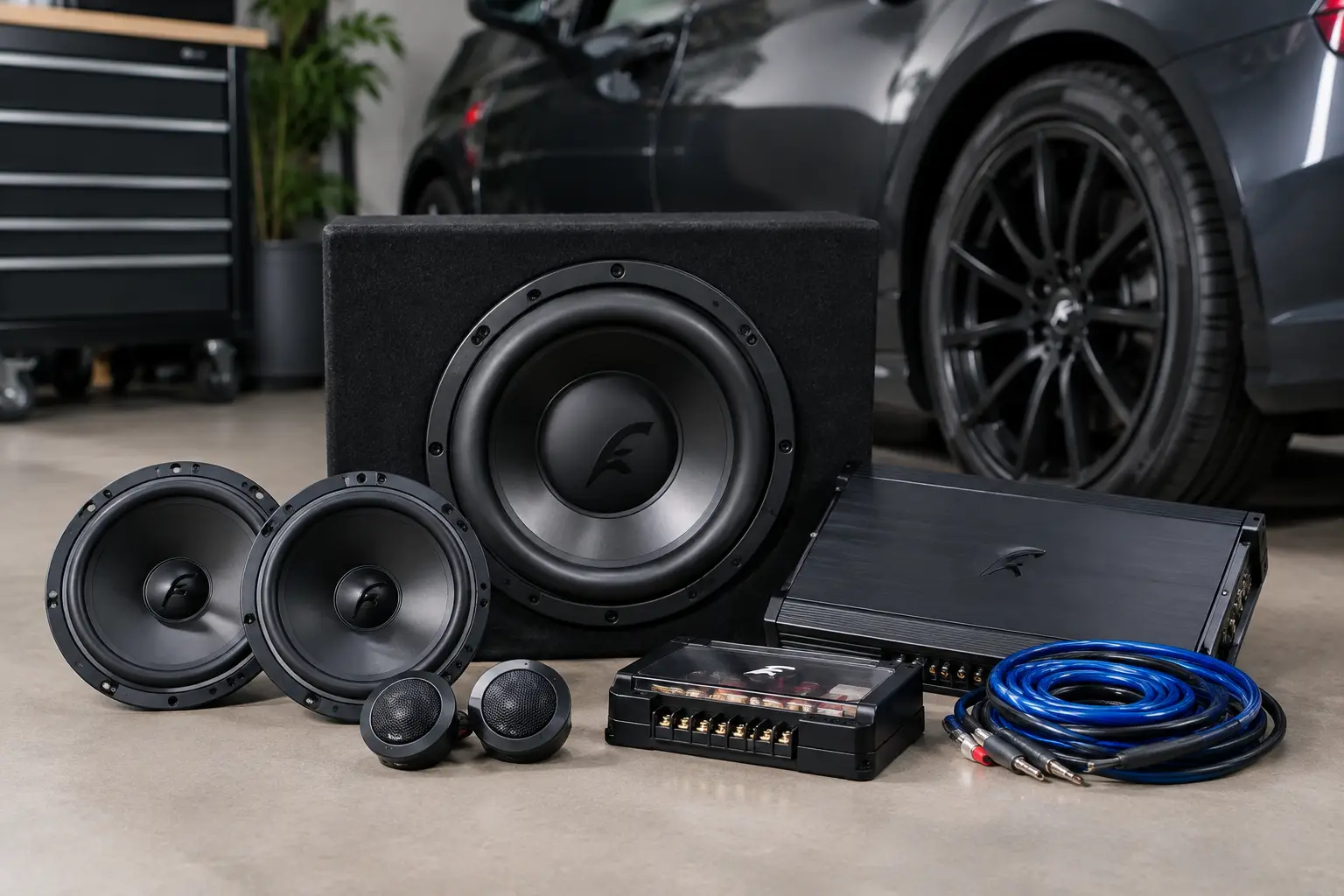
A factory system can fill the cabin, but it rarely delivers the impact a custom build deserves. The best aftermarket car audio system is not defined by the biggest subwoofer or the highest wattage number on a box. It is a balanced system built for your vehicle, your listening style, and the level of sound pressure and clarity you expect when the doors close.
For a daily-driven luxury sedan, that may mean clean staging, tight bass, and an installation that retains a factory appearance. For a truck, muscle car, or show build, the goal may be deeper low-end output that holds its own at a meet. The right answer changes with the vehicle. That is exactly why vehicle-specific planning matters.
What Makes the Best Aftermarket Car Audio System?
A serious audio upgrade works as one system. Speakers, amplification, subwoofers, enclosure design, electrical support, signal processing, and tuning must agree with each other. Adding one premium component to an otherwise stock system can help, but it will not produce the control, volume, or detail of a properly matched build.
Start with the result you want. If you care most about vocals, guitars, and precise detail, prioritize front speakers, amplification, and digital signal processing. If you want the cabin to feel every kick drum and bass line, subwoofer selection, enclosure volume, and amplifier power become the center of the build. Drivers who want both need a balanced configuration rather than a compromise built around one oversized component.
The best setups also respect the vehicle itself. A coupe has limited air space and different acoustic challenges than a full-size SUV. A pickup can hide a powerful low-profile enclosure beneath the rear seat, while a trunk car may support a larger custom enclosure. Fitment determines what will perform well without sacrificing daily usability.
Speakers establish the character
Speakers do more than get louder than factory replacements. A quality component speaker set separates frequencies more accurately, produces clearer midrange detail, and gives the front of the cabin a stronger soundstage. The goal is for music to feel placed in front of you, not trapped at your feet or firing from a door panel.
Component systems use separate woofers, tweeters, and crossovers. They take more installation work, but they offer better placement options and stronger imaging than basic coaxial speakers. Coaxials still make sense for rear fill or straightforward upgrades where budget, space, or installation time is limited.
Do not build around rear speakers first. In most vehicles, the front stage does the heavy lifting. Put the better equipment, power, and tuning attention toward the front of the cabin, then use rear speakers to support the experience rather than pull it behind you.
Subwoofers bring the system to life
Subwoofers handle the frequencies standard door speakers cannot reproduce with authority. The right subwoofer setup gives bass weight and control. It should hit hard when the track calls for it, then disappear into the music instead of smearing every note into a constant rumble.
Size matters, but it is not the whole story. A well-designed pair of 10-inch subwoofers can be quicker and more controlled than a poorly matched pair of 12s. A single high-quality 12 can outperform multiple budget subs when it is paired with the right enclosure and clean power. The enclosure is part of the system, not an accessory.
Sealed enclosures generally favor compact packaging and controlled response. Ported enclosures can deliver greater output and more aggressive low-end presence, but they demand accurate design and take up more space. If cargo room matters, choose the enclosure first, then select subwoofers that work within its available volume.
Amplification is about control, not just volume
An amplifier gives speakers and subwoofers the clean power they need to perform. Factory head units and weak amplifiers often run out of control well before the system sounds truly loud. The result is distortion, harshness, and eventually damaged equipment.
Match amplifier power to the continuous RMS rating of the speakers or subwoofers, not inflated peak-power claims. A correctly sized amplifier with a clean signal is safer than an underpowered amplifier pushed into clipping. Gain settings are not a volume knob. They must be set to match the source signal and protect the equipment.
A multi-channel amplifier can run a full speaker system, while a dedicated mono amplifier is typically used for subwoofers. Larger builds may use both. The final configuration depends on how much output you want, what equipment you are running, and where it can be mounted securely in your vehicle.
Build the System Around Your Vehicle
A universal shopping list is not the same as a custom audio plan. Vehicle-specific fitment accounts for speaker locations, door depth, factory signal integration, battery location, cargo space, and available amplifier mounting positions. It also prevents the common mistake of buying equipment that looks right on paper but creates problems during installation.
Modern vehicles add another layer. Factory infotainment systems often control climate settings, cameras, alerts, and vehicle menus. Replacing the radio may not be practical or desirable. In those cases, a properly integrated system can retain factory controls while adding amplification, processing, speakers, and bass output.
Signal processors are especially valuable in newer vehicles. They can correct factory equalization, manage crossover points, adjust time alignment, and shape the signal sent to each channel. This is where a system moves beyond loud and starts sounding intentional.
Ryder Acoustics systems are built around this principle: equipment should suit the vehicle, not force the vehicle to suit a generic package. That approach gives custom builds a cleaner installation, more dependable performance, and an audio system that feels like part of the car rather than an afterthought.
Choose the Right Level of Bass and Output
There is no single best aftermarket car audio system for every driver because listening habits are different. A balanced daily system may use amplified front components, rear fill, a compact subwoofer enclosure, and careful DSP tuning. It will play cleanly at highway volume without taking over the vehicle.
A bass-forward build shifts the budget toward larger subwoofers, stronger mono amplification, upgraded wiring, and a custom enclosure. It creates the low-frequency authority many enthusiasts want, but it can cost cargo space and demand more from the vehicle's electrical system.
For high-output systems, electrical support is not optional. Quality power and ground wiring, correctly sized fusing, a healthy battery, and, in some builds, a higher-output alternator help keep voltage stable. Voltage drop reduces performance and can put expensive amplifiers at risk. More power always comes with more responsibility in the installation.
Avoid the Upgrades That Waste Money
The fastest way to weaken an audio build is buying components based on separate specifications rather than how they work together. A powerful subwoofer on a weak amplifier will not deliver its potential. Premium speakers fed by distorted factory power will not sound premium. An improperly designed enclosure can make even excellent subwoofers disappointing.
Avoid chasing maximum speaker count. More speakers do not automatically create better sound. Poor placement, mismatched sensitivity, and conflicting frequencies can make a system louder but less clear. A focused front stage, properly powered subwoofer section, and accurate tuning usually outperform a cabin packed with random drivers.
Installation quality matters just as much. Loose panels, inadequate sound treatment, poor grounds, undersized wiring, and rushed tuning all show up in the final result. Sound deadening can reduce panel vibration and road noise, allowing the system to sound more controlled without adding another watt of power.
Tuning Is Where Premium Equipment Earns Its Place
Once the hardware is installed, tuning determines whether the build sounds finished. Crossovers protect speakers and direct each frequency range to the component built to handle it. Equalization corrects vehicle-specific peaks and dips. Time alignment helps music arrive at the driver's seat with a more natural stage and better focus.
Tuning should be done with restraint. Excessive bass boost, aggressive EQ curves, and gains set too high may impress briefly, but they create distortion and shorten equipment life. The best systems have authority without sounding strained. They remain clear when the volume comes up and composed when the track changes from hip-hop to rock to acoustic music.
A custom vehicle deserves the same attention to sound as it receives in forged wheels, stance, and finish. Choose components that match the vehicle, give the front stage priority, build bass around the right enclosure, and leave room in the budget for professional wiring and tuning. Then every drive has the presence your build was made to carry.