
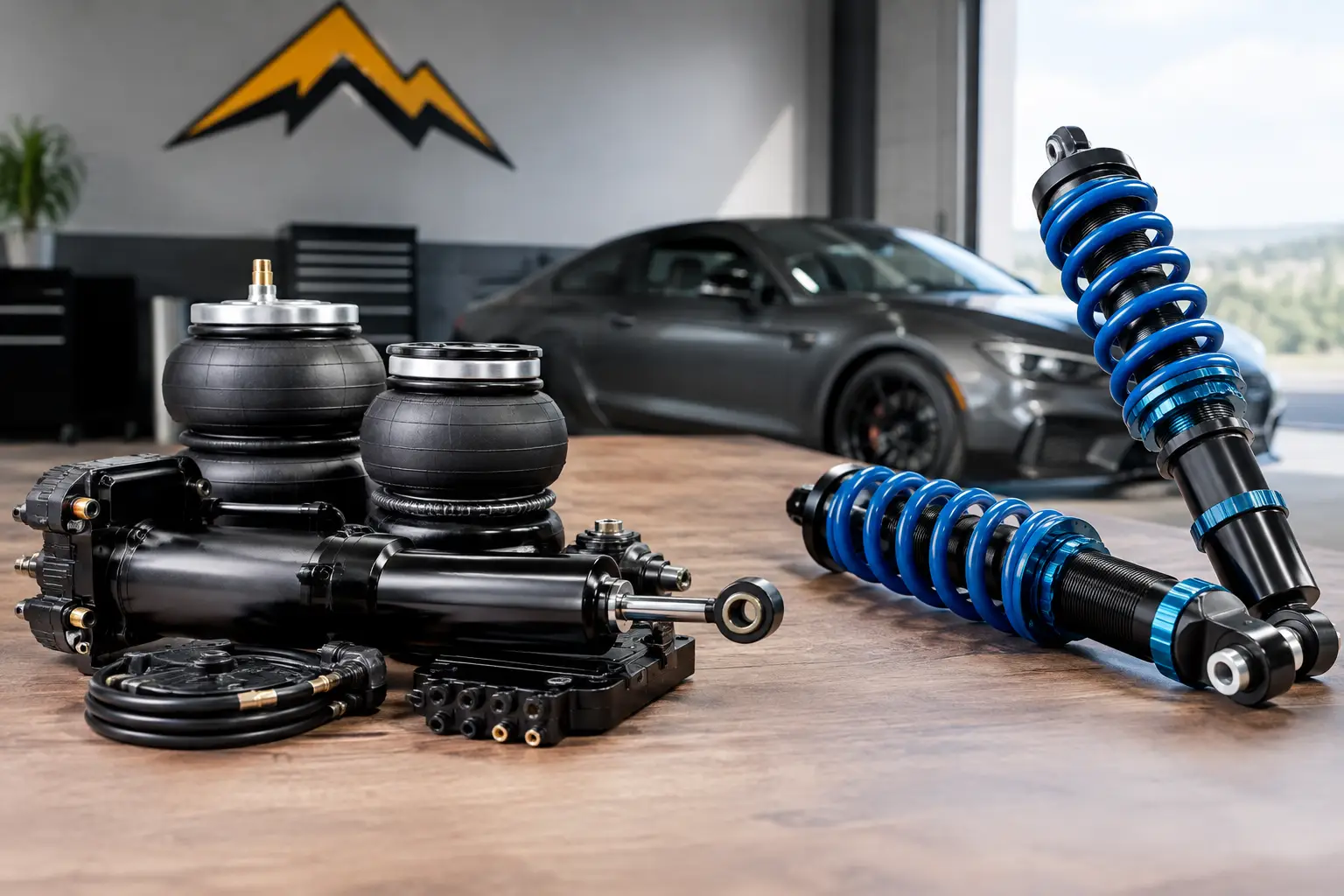
A clean fender-to-lip fitment can make a build stop traffic. It can also turn into a scraping, bouncing headache if the suspension choice does not match how the vehicle is actually driven. In the air suspension vs coilovers debate, there is no universal winner. There is only the setup that fits your vehicle, your roads, your wheel fitment, and the statement you want the build to make.
Coilovers deliver a fixed, performance-focused stance with fewer moving parts. Air ride delivers height control on demand, letting a vehicle sit low when parked and rise when the road calls for clearance. Both can transform the look and handling of a car, truck, or SUV. The difference is how much flexibility you need after the build leaves the garage.
Air Suspension vs Coilovers: The Core Difference
Coilovers combine a coil spring and shock absorber in one adjustable assembly. Most setups let you change ride height, while higher-end systems may add damping and rebound adjustment. Once the vehicle is aligned and dialed in, its ride height stays where you set it. That consistency is exactly why coilovers remain a strong choice for street-performance cars, track-oriented builds, and owners who know the height they want.
Air suspension replaces the conventional spring with an air spring or air bag. An onboard compressor, tank, air lines, valves, and controller manage the system. With the push of a button, the vehicle can lift for driveways, speed bumps, steep ramps, and rough pavement, then drop into its parked stance when it is time to make an entrance.
The distinction is simple: coilovers set one primary ride height, while air ride gives you multiple usable heights. That added control changes the entire ownership experience.
When Coilovers Make the Most Sense
A properly selected coilover system is direct, purposeful, and effective. For an owner who wants a lower center of gravity, a planted appearance, and sharper road manners without installing air management, coilovers are hard to overlook.
They are especially well suited to drivers who prioritize predictable suspension behavior. A quality coilover setup can reduce excessive body movement, support aggressive wheel and tire fitment, and provide a more connected feel through corners. That makes sense for performance sedans, coupes, muscle cars, and weekend street builds that see spirited driving.
Coilovers also simplify the package. There are no compressors to mount, no tank to position, no air lines to route, and no electrical management system to configure. The initial investment is often lower than a complete air-ride system, particularly when installation labor is included.
That simplicity comes with a real compromise. A static vehicle at an aggressive height must live at that height. If your route includes steep driveways, uneven streets, parking garage transitions, or tall speed bumps, you need enough clearance built into the final setting. Splitters, exhaust components, side skirts, and low-hanging hardware do not care how good the fitment looked in the shop.
Coilovers are the right answer when the desired ride height is practical for the way you drive. If it is not practical, lowering the vehicle further is not a solution. It is an invitation to damage parts you just paid to install.
What Coilovers Demand From the Build
Coilovers reward careful setup. Spring rates, shock valving, damper settings, alignment specs, wheel width, offset, tire size, and fender clearance all work together. Installing coilovers and simply dropping the vehicle as low as possible is not tuning. It is how tire rub, poor ride quality, premature tire wear, and compromised handling enter the picture.
For a fixed-height build, fitment must be measured for the suspension under compression and through steering travel, not just while the vehicle is parked. This matters even more with wide forged wheels, low-profile tires, aftermarket brakes, or aggressively shaped fenders.
Why Air Ride Changes a Custom Build
Air suspension is built for owners who refuse to choose between a show-ready drop and real-world drivability. At parked height, the vehicle can sit with an intentional, low-profile presence. At driving height, it can gain the clearance needed to move through the real world without treating every driveway like an obstacle course.
That flexibility is valuable on nearly every type of build. A luxury sedan can air out at an event and raise for a long highway drive. A truck can sit low for the show field, then lift for jobsite access or uneven roads. A performance car can run close wheel fitment without making every fuel stop a risky maneuver. On a properly engineered system, the vehicle can return to preset heights consistently rather than relying on guesswork.
Air ride also gives builders more room to pursue visual fitment. When the vehicle can lift before moving, the parked stance can be more aggressive than a static setup that has to clear every road imperfection at all times. That does not eliminate the need for correct wheel specs, tire clearance, and suspension geometry. It simply gives the build another layer of control.
A complete system requires more planning. The air tank, compressors, management, wiring, and plumbing need clean installation locations. The system should be installed with protected air lines, secure electrical connections, quality fittings, and enough service access for long-term ownership. A rushed installation can create leaks, noise, slow operation, or a trunk that looks unfinished.
The best air-ride installs treat the management system as part of the build. The hardware should be reliable, but it should also look deliberate. That is especially important on show vehicles, where a clean trunk layout, coordinated audio installation, and custom wheels can make the entire vehicle feel designed rather than modified in stages.
Ride Quality and Handling Are Setup Questions
Neither air suspension nor coilovers automatically ride better. This is where generic advice falls apart.
A cheap coilover with harsh spring rates can ride poorly. A quality coilover selected for the vehicle and set at a sensible height can feel controlled and composed. The same applies to air ride. A complete, well-matched air system with appropriate shocks and calibrated management can be comfortable on the street, while an improperly assembled setup can feel inconsistent or underdamped.
For dedicated track use, coilovers generally have the edge in simplicity, repeatability, and performance tuning. They are designed around a static spring rate and fixed geometry, which gives serious drivers a consistent platform for dialing in handling behavior.
For street-driven vehicles that need stance without sacrificing access, air suspension has the advantage. It lets the owner separate driving height from display height, a benefit that matters more than lap-time precision for most custom builds.
Do not confuse a lower vehicle with a better-handling vehicle. Excessive lowering can reduce suspension travel, place components outside their ideal operating range, and create bump steer or poor tire contact. The goal is a vehicle that looks right and works right.
Cost, Maintenance, and Long-Term Ownership
Coilovers usually cost less to purchase and install than a full air suspension system. Their maintenance needs are straightforward: inspect the shocks, springs, mounts, and adjustment hardware, then keep the alignment current as the vehicle settles or ride height changes.
Air ride costs more because it is a complete system, not only a set of suspension units. Beyond the air springs and shocks, you are paying for management, compressors, tank, fittings, air line, wiring, controller, and installation. That investment buys capability, not just a lower stance.
Air systems require periodic attention. Owners should inspect air lines and fittings, monitor compressor performance, drain moisture from the tank as required by the system, and address leaks before they become bigger issues. High-quality components and professional installation matter because the system is only as dependable as its plumbing, electrical work, and calibration.
For owners who build once and maintain correctly, air ride is not an impractical luxury. It is a functional suspension choice with a higher entry cost. For owners who want the lowest possible cost and a fixed performance stance, coilovers remain the cleaner route.
Match the Suspension to the Vehicle You Drive
Choose coilovers when the vehicle has a realistic fixed ride height, handling response is the priority, and you want a focused setup with minimal system complexity. They work best for drivers who value a static stance and accept the clearance limits that come with it.
Choose air suspension when the build needs to look low without staying low on every mile. It is the stronger choice for show-focused vehicles, premium daily drivers, aggressive wheel fitment, and any vehicle that sees driveways, travel, passengers, cargo, or unpredictable roads.
The decision should start with the finished build, not a single part. Wheel diameter, width, offset, tire profile, brake clearance, body lines, intended ride height, and daily use all shape the right answer. A set of custom forged wheels deserves suspension that supports the fitment instead of fighting it.
Maddox Motorworks approaches air-ride suspension the same way it approaches every serious custom build: built around the vehicle, the fitment, and the outcome. Pick the system that lets your vehicle drive with confidence, sit with purpose, and look exactly like it belongs to you.